French Horn · treble clef
French Horn Fingering Chart
Every note on the French horn, from low E to high C, with single F horn fingerings and the B♭ side for double horn.
Written pitch, horn in F. A written C sounds as concert F, a fifth lower.
Low notes
On a double horn, low notes like this are often played on the B♭ side.
On a double horn this low F is usually played on the B♭ side, with the thumb valve and no other valves.
Low note. On a double horn this is usually played on the F side, as shown.
Open, no valves. On a double horn this is usually played on the F side.
Middle notes
Open, no valves.
Open, the same fingering as the C below and the G above. E sits between them: buzz faster than for C but slower than for G.
Open. Many double-horn players switch to the B♭ side from G♯ upward.
High notes
Open. Up here the notes sit close together, so hear the pitch before you play it.
Open fingering. Listen carefully; nearby open notes are easy to land on by mistake.
Open. Top of the standard range.
Printable chart
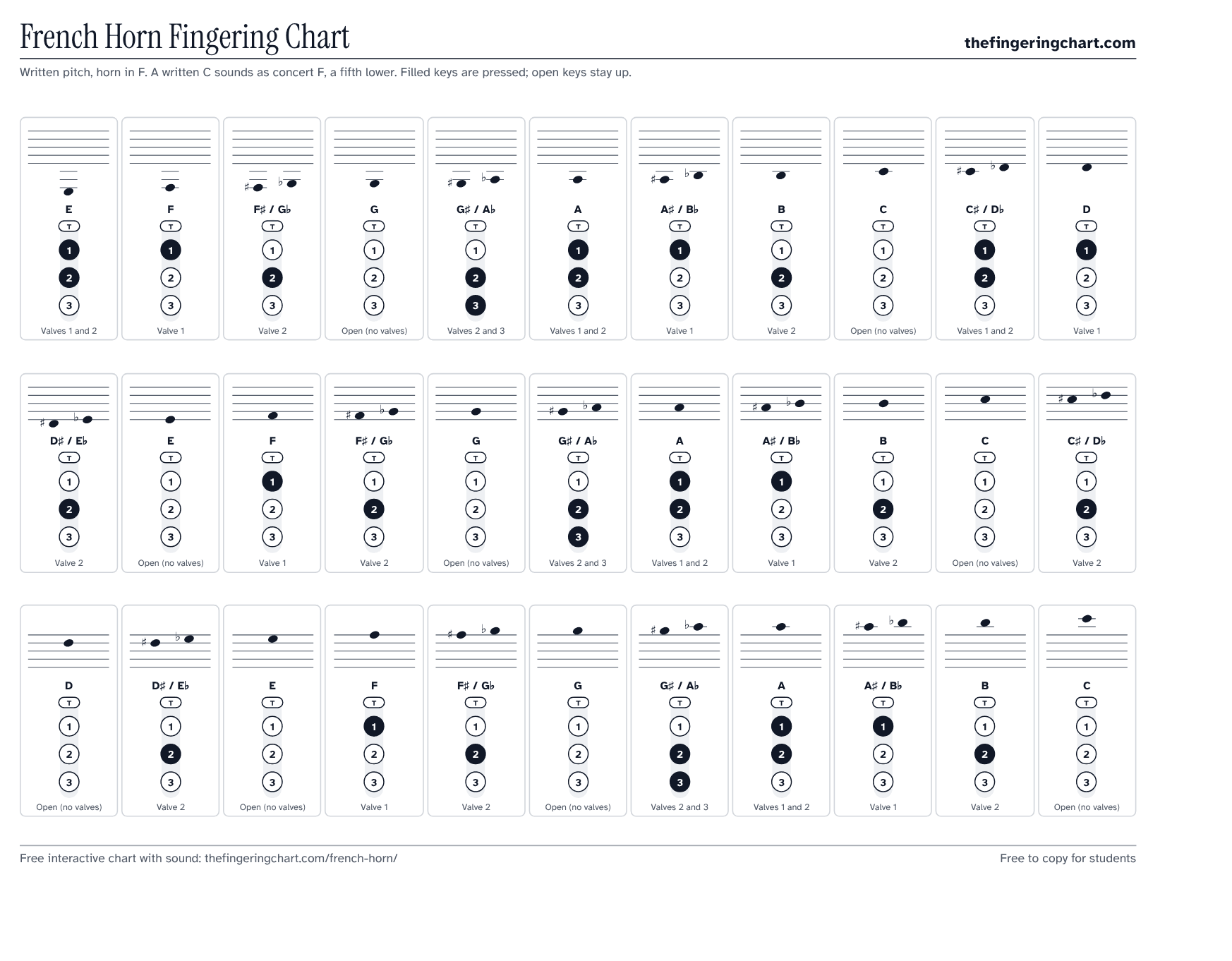
How to read this chart
Valve 1 is the one under your first finger. Filled valves are pressed down; “Open” means no valves.
T is the thumb valve on a double horn. The main fingering is for a single F horn; the B♭-side fingering (thumb down) is listed as an alternate.
Many notes share the same valves. Your air and lips choose which one sounds.
Which notes come first
Beginners usually start around the C and G in the staff. Many double horn players switch to the B♭ side from about the G on the second line up.
Next: French Horn scales