Tuba · bass clef
Tuba Fingering Chart
Every note on the B♭ tuba and sousaphone, from low E to the F above the staff, with 4th-valve fingerings where they help.
BB♭ tuba, concert pitch, bass clef. The same chart works for sousaphone.
Low notes
Lowest regular note on a 3-valve tuba. Valves 1-2-3 play sharp here, so lip the note down (some players pull out a valve slide). A 4-valve tuba uses valves 2 and 4.
Valves 1 and 3 play sharp here. A 4-valve tuba uses the 4th valve alone.
Open, no valves.
Valves 1-2-3 play sharp here. A 4-valve tuba uses valves 2 and 4.
Valves 1 and 3 play sharp here. A 4-valve tuba uses the 4th valve alone.
Middle notes
Open, no valves.
High notes
Open, the same fingering as the F an octave lower.
Open. Faster air and firmer lips get you up to this B♭.
Some charts use valves 1 and 2 instead; both work.
Open; some charts use valve 1 instead.
Printable chart
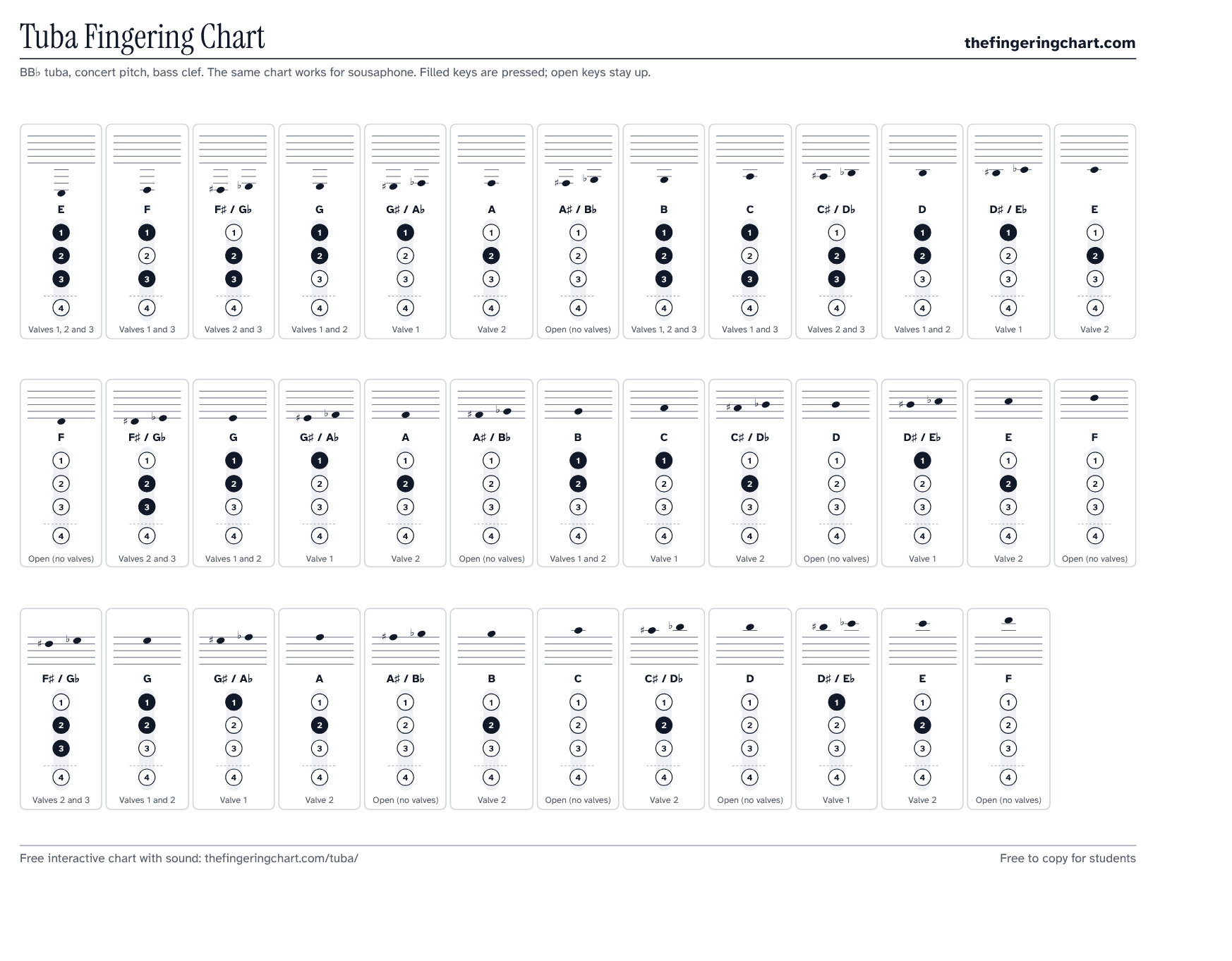
How to read this chart
Valve 1 is the one under your first finger. Filled valves are pressed down; “Open” means no valves.
Valve 4, below the others, is only on 4-valve tubas. Its fingerings are listed as alternates.
Many notes share the same valves. Your air and lips choose which one sounds.
Which notes come first
Most beginners start around B♭ and F in the staff, then work down toward low F and up toward middle B♭.
Next: Tuba scales